1. This is the Sun, and it gives off light and heat.
这是太阳,它发出光和热。
- gives off · 发出 /ɡɪvz ɔf/
2. Every day, Earth rotates on its axis, bringing us day and night.
地球每天绕地轴旋转,为我们带来昼夜。
- rotates on its axis · 绕自身轴线旋转 /ˈroʊteɪts ɑn ɪts ˈæksɪs/
3. At the same time, Earth orbits the Sun, completing a trip each year.
与此同时,地球绕太阳公转,每年完成一圈。
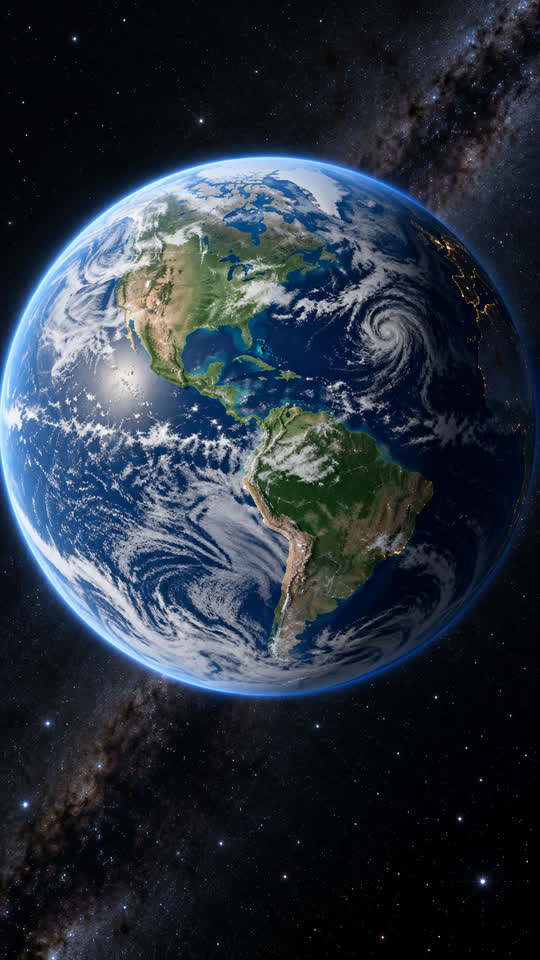
- orbits the Sun · 绕太阳运行 /ˈɔrbɪts ðə sʌn/
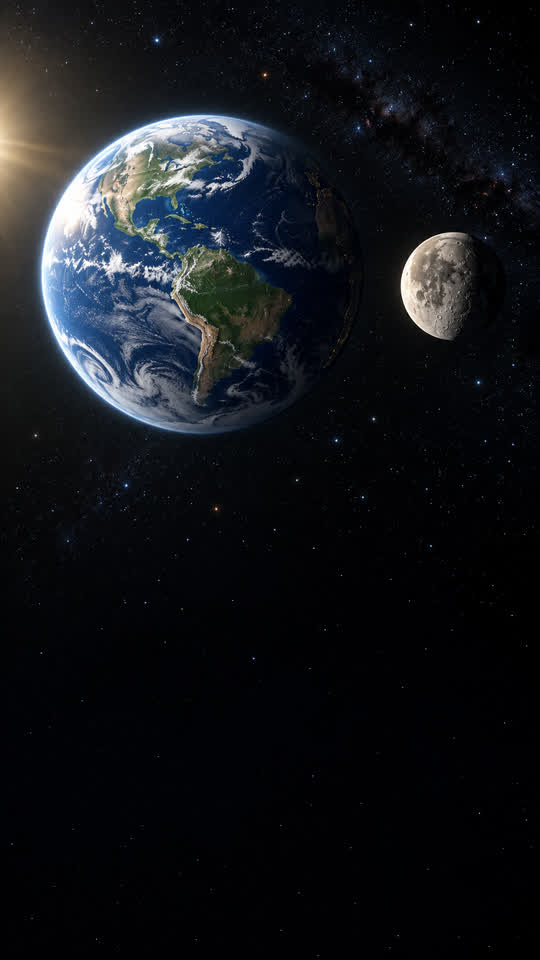
4. The Moon orbits Earth, and its surface reflects sunlight.
月亮绕地球运行,它的表面反射阳光。
- orbits Earth · 绕地球运行 /ˈɔrbɪts ɝθ/
- reflects sunlight · 反射阳光 /rɪˈflɛkts ˈsʌnlaɪt/
5. As the Moon moves, we see different portions of its sunlit half—these are the Moon's phases.
随着月亮移动,我们看到它受光一半的不同部分,这就是月相。
- different portions · 不同部分 /ˈdɪfrənt ˈpɔrʃənz/
- the Moon's phases · 月相 /ðə muːnz ˈfeɪzɪz/
6. When the Sun, Earth, and Moon line up, we may witness an eclipse.
当太阳、地球和月亮排成一线时,我们可能看到日食或月食。
- line up · 排成一线 /laɪn ʌp/
- an eclipse · 日食或月食 /ən ɪˈklɪps/